Rain Room Sharjah is one of the most talked-about art experiences in the UAE. It invites visitors to walk through a rain without getting anywhere, but it sounds like an impossibility until you see the technology in action. At the same time, Rain Room is more than a photo-friendly installation. It is a powerful piece of contemporary art that deals with the relationship between people, nature, water and machines in an increasingly mediated world.
What Is Rain Room?
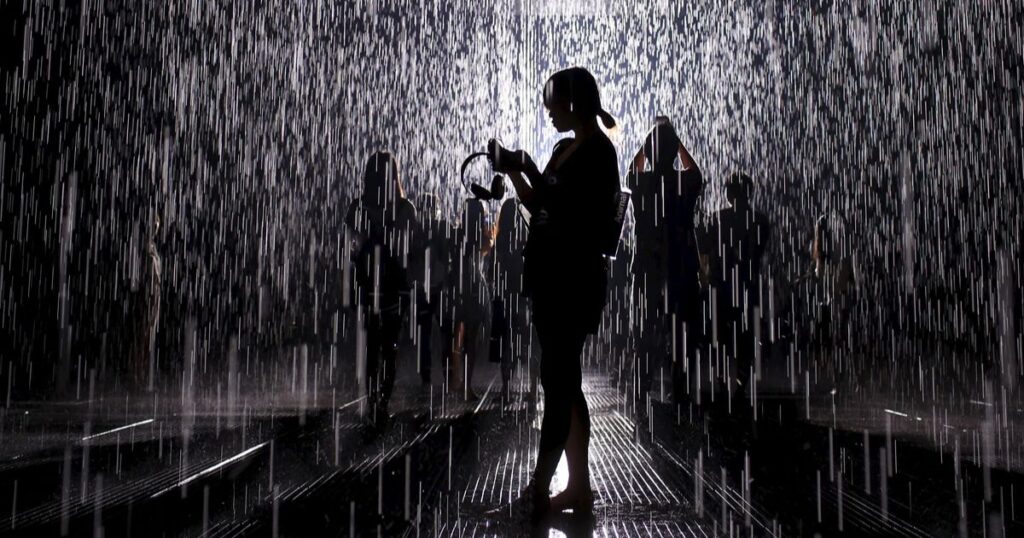
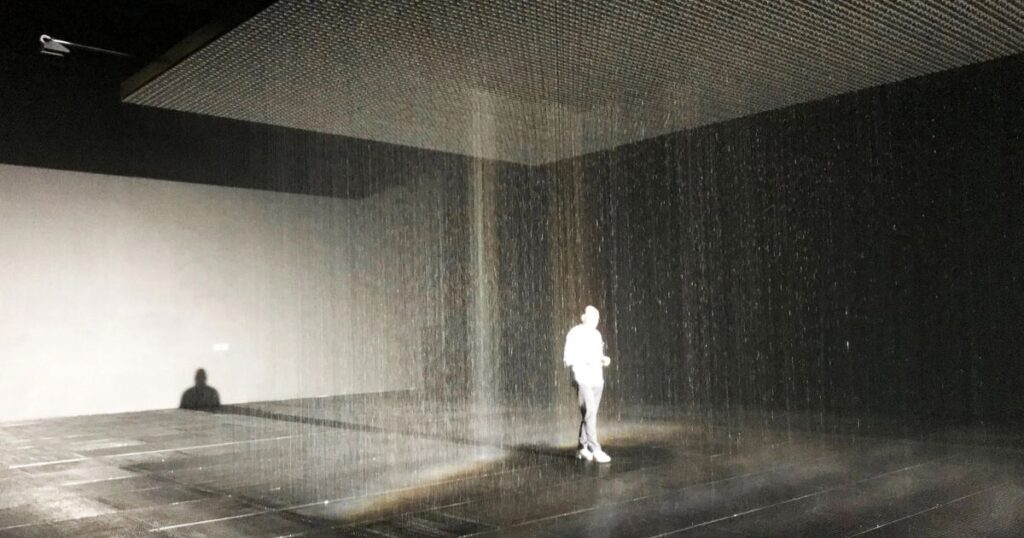
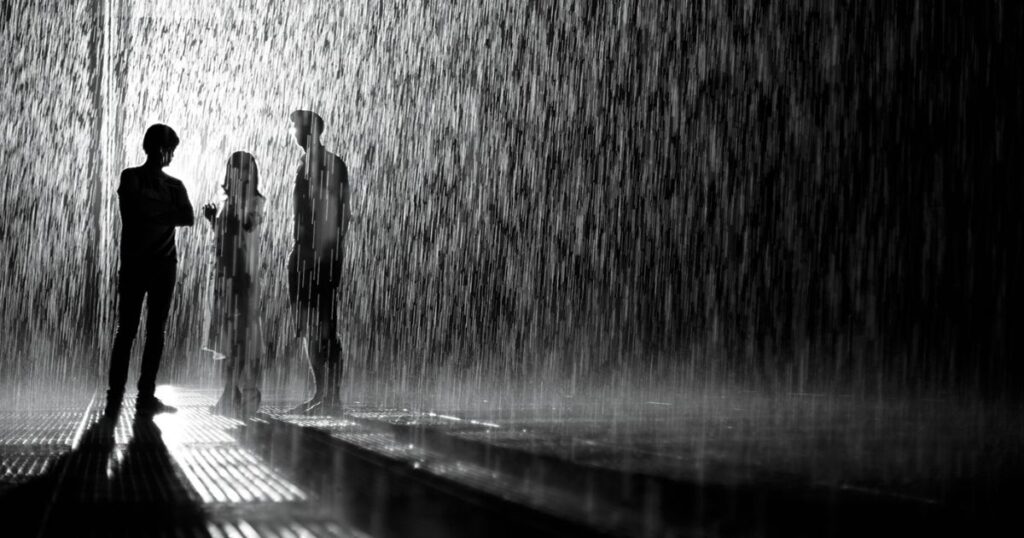
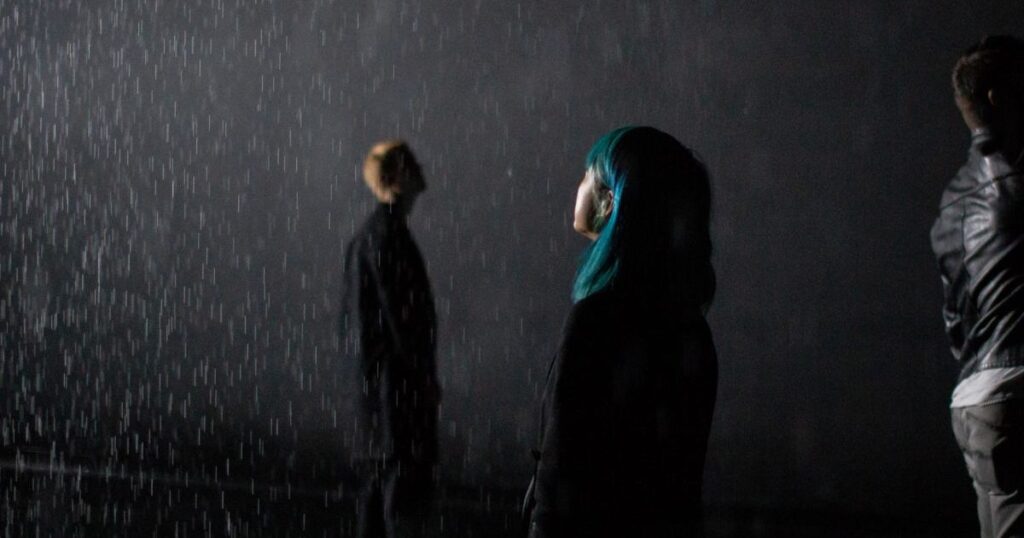
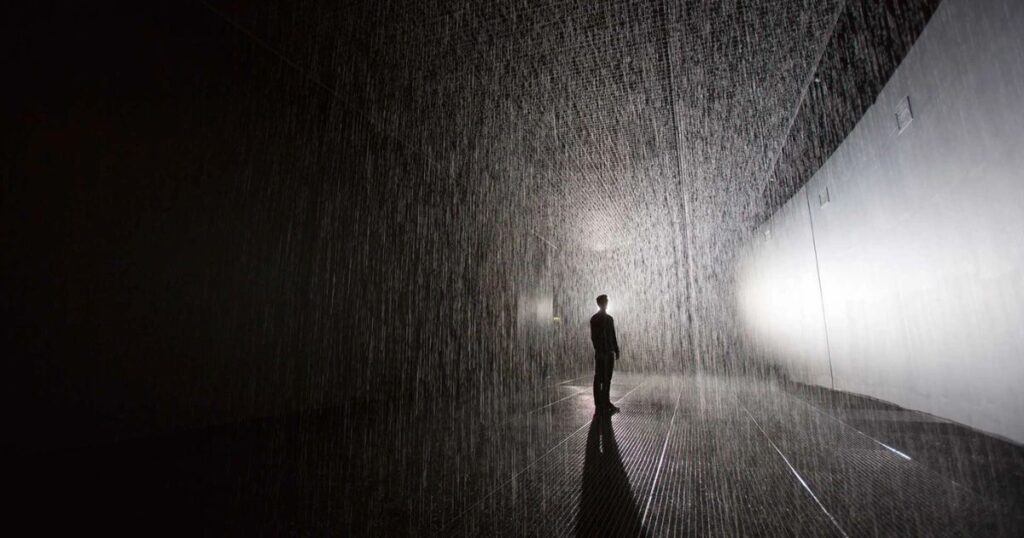
Rain Room is an immersive installation created by Random International. In the dark indoor environment, there is an incessant downpour from the ceiling. However, once a person’s movement is detected by motion sensors as he/she starts walking through the room, a controlled system stops the falling water around the person.
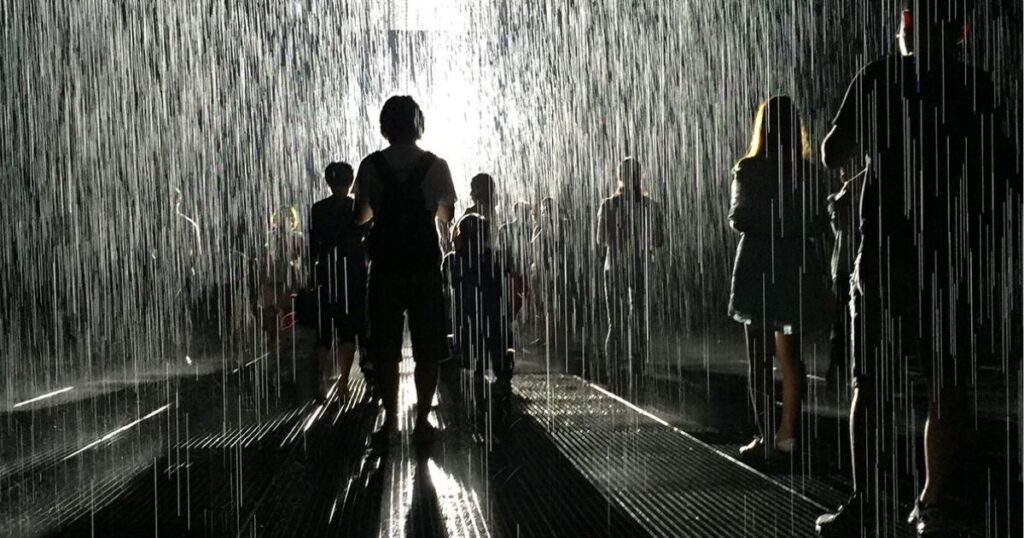
As a result, visitors are able to circulate through the space and are often not completely wet, but mostly dry. That simple idea makes for a startling experience. You hear the rain, feel the atmosphere, and notice every step. Because of that, the work becomes an ordinary movement put on a silent stage by audience interaction.
Where Is Rain Room in Sharjah?
The best-known regional version is Rain Room at Sharjah Art Foundation in Al Majarrah, Sharjah. This venue is part of the wider collection of the Sharjah Art Foundation, which supports ambitious the art throughout the Middle East. The collection includes sculpture, film, public projects, and artist designed permanent spaces, yet Rain Room remains one of its most famous works.
Further, the Sharjah version is important as it is a permanent installation. It is widely noted as the first permanent installation of Rain Room, which gave the project a lasting home in the country. For role of the many who are planning a trip from Dubai, has become one of the most incredible attractions in the UAE.
Who Created Rain Room?
Random International, founded in London, created Rain Room. The studio is known for work that combines technology, movement, behavior and space. Their art frequently poses questions of how humans react when a machine notices them and follows them or changes the environment around them.
Before Sharjah, Rain Room appeared at major institutions including the Barbican in London, MoMA in New York, and Yuz Museum in Shanghai. Each visit helped to build its world reputation. Still, Sharjah does offer something different: Not a short event, but a destination that people can return to, again and again, over a period of time.
How Does Rain Room Work?
Here is the short answer to the question many of the readers have been craving:
- Water falls from the ceiling in an idly fashion.
- Motion sensors detect the location of each person.
- A digital system orders the overhead equipment where to shut off the water.
- The room provides the feeling of rain without getting wet.
That said, no system is 100% perfect. If you are too quick, take too close a step to another visitor or enter a busy time, you may feel some mists or a bit of a splash. Even then, the goal is obvious: to have a space where the hand of man momentarily changes the face of nature by using technology.
Quick Facts About Rain Room
| Detail | Information |
|---|---|
| Artist | Random International |
| Location | Sharjah Art Foundation, Al Majarrah, Sharjah |
| Type | Immersion contemporary art installation |
| Key feature | Allows people to feel the rain without getting wet |
| Technology | Motion sensors, water system |
| Water use | Self cleaning recycled water |
| Best for | Art lovers, Family, Tourist, Photography |
Why Is Rain Room Important in Contemporary Art?

Rain Room stands out because it makes visitors part of the work. Rather than viewing art from a distance you move through it. Therefore, the installation is personal, physical and memorable. It also raises a deeper question; what happens when nature becomes something that humans can pause, direct and control?
That idea gives the work a lasting value in the world of contemporary art. The relationship of people and the environment is placed at the centre of the piece. Rain is generally felt wild and out of our control. Here, in contrast, the weather reacts to the presence of a body in space. That tension between freedom and control gives Rain Room its emotional force.
What Should Visitors Know Before a Rain Room Visit?
Planning ahead helps. Although some galleries offer free admission, Rain Room often uses timed entry, so check current tickets before you go. The tickets are sold online in many cases, and some of these dates can fill up quickly on Thursday, Friday, or Saturday. If you miss your entry slot, you may be asked by staff to wait for the next available entry.
You should also ensure it is entry rules. At some times, ID required notices may have to apply for bookings check or special events. Since there is a maximum capacity of the room, the staff manage the number of people in the room. That limit is there to give protection to the piece of art, as well as to enhance the other experience.
Simple Visitor Tips

- Buy tickets in advance whenever possible
- Arrive early and follow signs at the location
- Move slowly to allow time for system response
- Wear shoes with grip in case surfaces are damp
- Stop frequently to savor the sound, light, and space
- If necessary ask if a companion can help you
Is Rain Room Good for Families and Accessible Visitors?
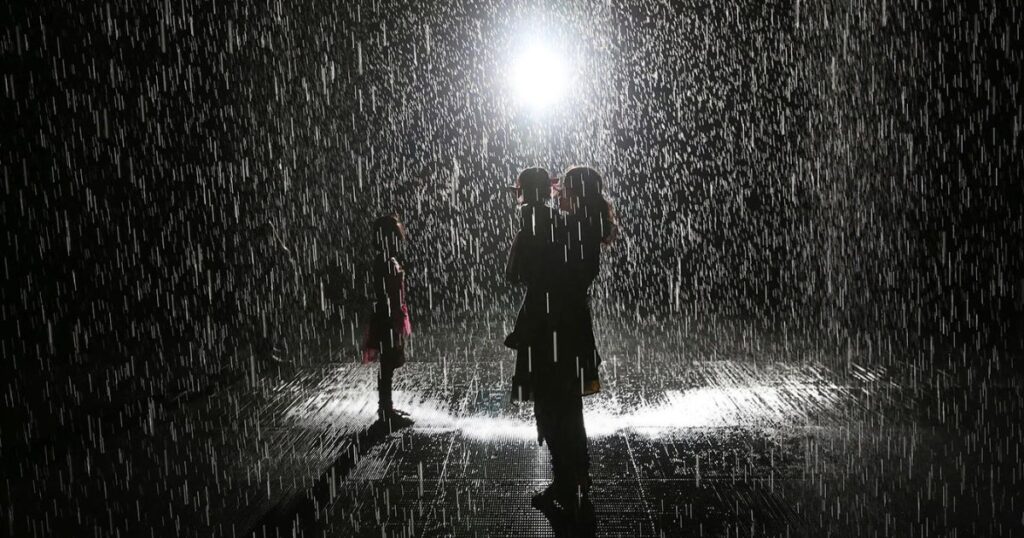
Yes, many adults and children enjoy Rain Room, especially for the first time. Still, younger children are to be kept close to a parent because the dark room and the sound of water can be intense. For school groups, teachers often use the work to discuss science, design, climate and art in one lesson.
Accessibility matters too. Visitors with disabilities should confirm up-to-date guidance before they visit – lighting, sound and damp floors can cause discomfort. Nevertheless, the installation is meant to be participatory, open to the widest possible people. It challenges every visitor to slow down, navigate with care and notice the way the space changes around them.
Why Visit Rain Room From Dubai or Elsewhere in the UAE?
A visit to Rain Room works well as a short cultural escape from Dubai. The drive is manageable and you will be able to combine the stop as well as other Sharjah museums and heritage areas. Because the Sharjah Art Foundation program is also comprised of film, performance, talks, and exhibitions, the greater area is rewarding to anyone seeking to explore beyond one artwork.
In short, Rain Room offers something rare: an artwork you do not just see, but feel. It consumes water, sensors, and a reactive machine to build a time of serenity among a storm. If you want one of the most memorable art experiences in Sharjah, Rain Room is absolutely worth adding to your next UAE journey.